
Journal 5 min read
The moment the room changes
At every major event, there is a moment when everything changes. It isn't marked on the programme, but everyone feels it.

Have you ever noticed that, at the events everyone talks about, there's always a specific moment that people come back to when they tell the story? It's not the arrival. It's not the dinner. It's that moment when the lights dim, the music takes on a different feel, and the whole room falls silent at the same time.
No one can explain it, but everyone can feel it. That is the moment that sets a well-organised event apart from a truly unforgettable one. And, contrary to popular belief, it does not happen by chance or through sheer luck: it is the result of an event organisation planned down to the last detail.
What's really happening in the first hour
During the first hour of any gathering, guests are doing three things at once: taking in the venue, looking for familiar faces and, subconsciously, deciding what sort of event it's going to be. They're in spectator mode. They observe, comment and compare.
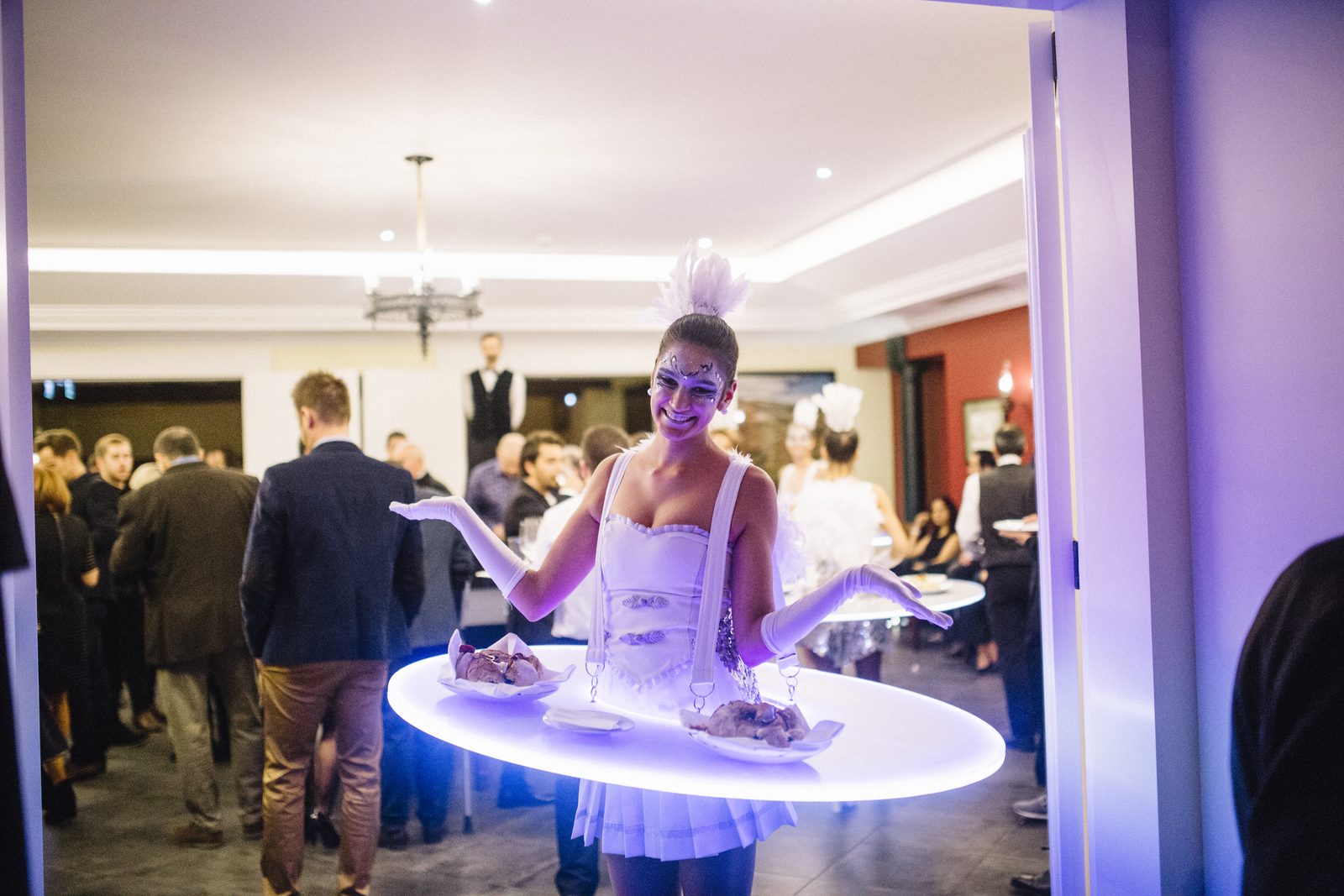
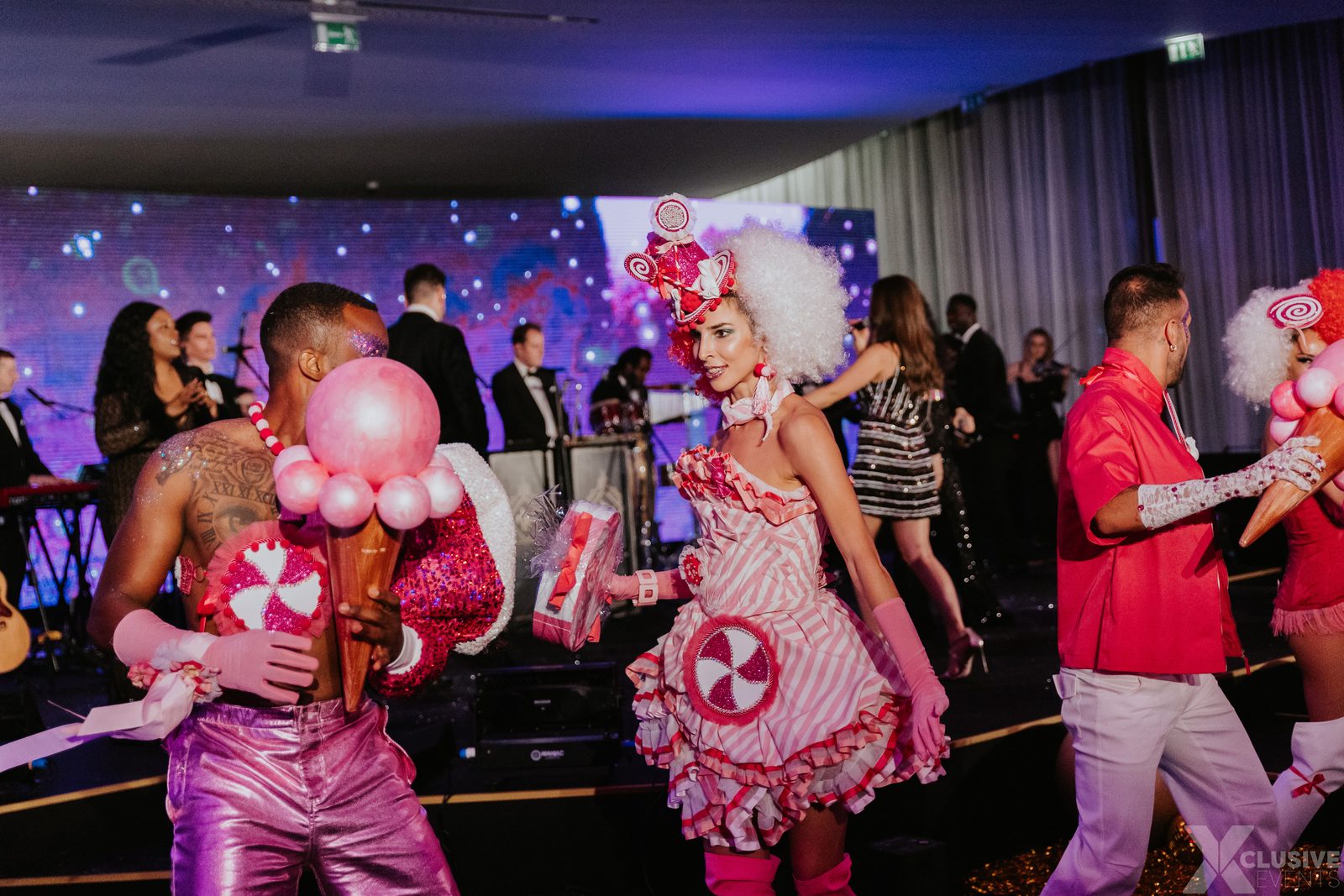
The turning point is when they stop watching and start taking part. It can be a dance troupe coming in from somewhere unexpected. It can be a saxophone that turns up in the middle of the dance floor without anyone seeing it arrive. It can be an aerial performance which makes a hundred people put their glasses down at the same time. The format of the show varies. The effect is always the same: from that moment on, the atmosphere in the room is transformed.
At Xclusive we call it the turning point, and it is the first thing we design in an event: before the flowers, before the menu, before the table layout. Because everything else exists to take us there, and what comes after exists to make it last.
Why it cannot be improvised
A moment like this depends on three variables, all of which are measured in seconds:
- Timing: Too early, and the guests aren't yet in the right frame of mind. Too late, and the energy has already dissipated amongst the tables, mobile phones and side conversations. There's usually a sweet spot, and it's often shorter than you might think.
- Surprise: A number that's announced is a number you assess. A number that nobody expected is a number you experience. That's why we often work on a part of the programme that not even the hosts know in detail.
- Transition: The most common mistake isn't in the performance itself, but in what comes before and after it. If the music fades away to make way for the show and returns hesitantly at the end, everything that has been achieved is lost. The energy must build, reach its peak and be released onto the dance floor without a lull.
The invisible choreography of a great show
What the audience perceives as spontaneity is, behind the scenes, a sequence timed down to the minute: the change in lighting, the sound cue that prepares the ear, the dancers positioned off-stage for four minutes, the technician who knows exactly on which beat the second spotlight comes on. In other words, everything has been planned down to the last detail.
This is where you see why shows, entertainment, scenography and music cannot be booked as separate boxes, or chosen from different suppliers. If the musical running order was decided by one person, the choreography by another and the lighting by a third, the turning point simply does not happen: you end up with three good elements that never quite come together.
When these elements are conceived by the same creative team, they cease to be mere services and become a staged production. It is this unity that makes Xclusive a different event production company, and that is how we have organised ourselves from the start.
How to tell if the event organisation is going well
There are signs that do not lie, and none of them is applause. The dance floor that fills up right afterwards and never empties again. The phones that go up before anyone asks. The people who turn to each other halfway through, just to check they are seeing the same thing. And, the next day, the sentence everyone repeats in the same order when they tell you what happened.
That is the real aim. Not to impress during the event, but to leave a memory that people keep retelling long after it is over. That is Xclusive.
How to put this idea into practice when planning your event
If you're planning a celebration, ask yourself one question before choosing suppliers: at what point in the event do I want people to experience something they weren't expecting?
Answer that first. Then build the rest around that answer. It's counterintuitive, because most events start with the venue and a defined budget, leaving the excitement until the end, to be shaped by whatever is left over.
Talk to us and ask us how to create the defining moment of your next event.